

News
 (5.0)
(5.0)
PSI vs. GPM: What Really Matters in a Pressure Washer?
When shopping for a pressure washer, PSI and GPM are the two specifications that dominate product labels and marketing claims. Many buyers assume higher PSI automatically means better cleaning performance, while others focus on water flow alone. In reality, effective pressure washing depends on how these two metrics work together. Understanding the true roles of PSI and GPM will help you choose a pressure washer that delivers faster, safer, and more efficient cleaning for your specific applications.
Understanding PSI and GPM
PSI (Pounds per Square Inch) measures the force with which water is expelled from the pressure washer. It reflects how much pressure is applied to a surface and directly affects the machine's ability to break the bond between dirt and the surface. Higher PSI is useful for stubborn, compacted grime such as dried mud, paint residue, or oil stains.
GPM (Gallons per Minute) refers to the volume of water flowing through the pressure washer. It determines how much water is delivered to the surface over time. A higher GPM allows loosened dirt and debris to be rinsed away more quickly and thoroughly.
In practical terms, PSI provides the cutting power, while GPM provides the flushing power. A pressure washer with high PSI but low GPM may loosen dirt effectively but take longer to wash it away. Conversely, a unit with high GPM but insufficient PSI may rinse well but struggle to remove bonded contaminants.
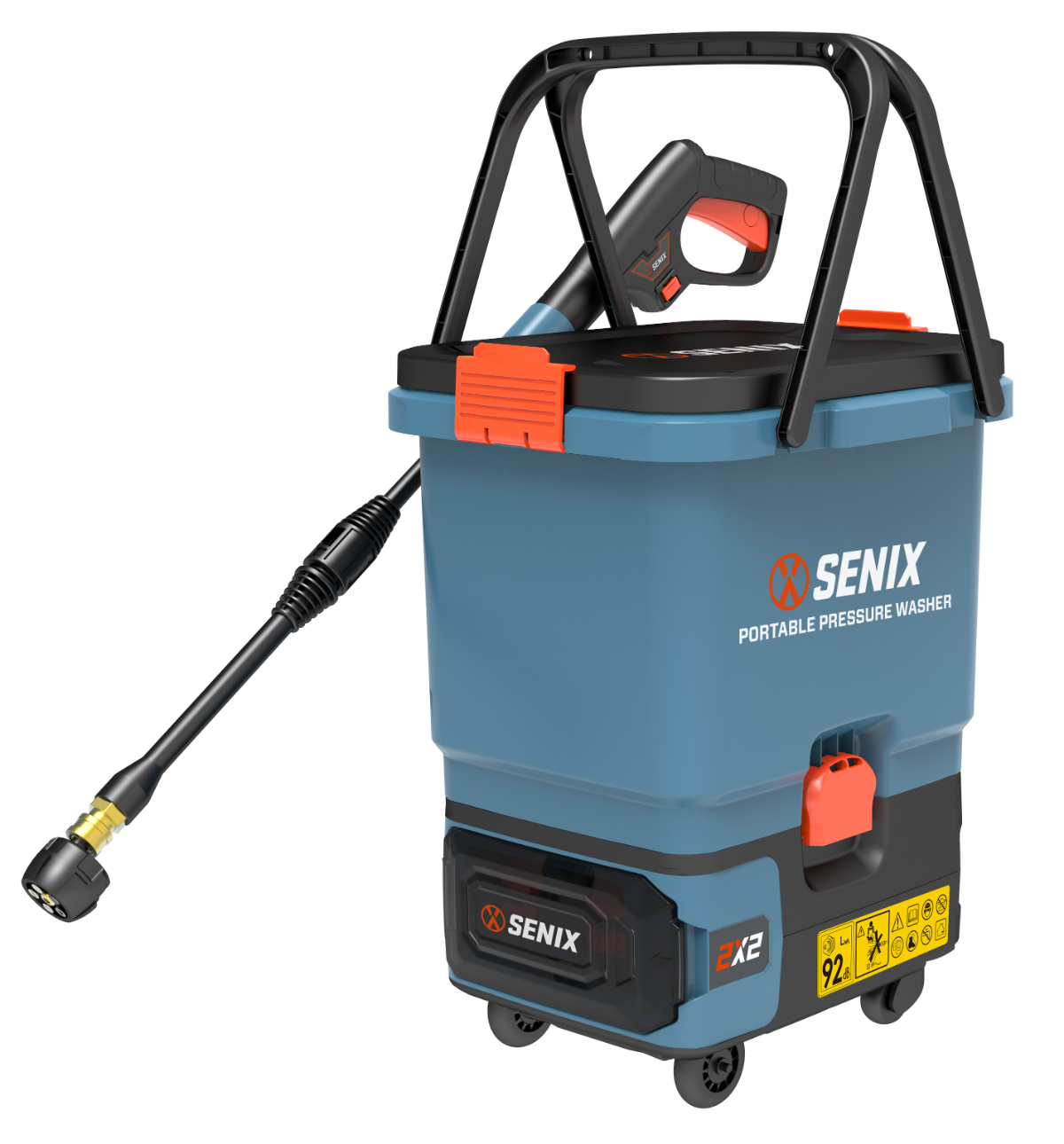
Senix 40V Brushless Portable Pressure Washer
How They Work Together
PSI and GPM are not competing metrics; they are complementary. The real cleaning performance of a pressure washer comes from the combination of pressure and flow. This relationship is often expressed as Cleaning Units (CU), calculated by multiplying PSI by GPM. While not always listed by manufacturers, cleaning units provide a clearer picture of overall capability.
For example:
A 3,000 PSI / 2.0 GPM pressure washer delivers 6,000 cleaning units.
A 2,500 PSI / 2.8 GPM pressure washer delivers 7,000 cleaning units.
Despite the lower PSI, the second machine can clean faster in many real-world scenarios because the higher water flow removes dirt more efficiently after it has been loosened.
Balanced PSI and GPM also improve operator control and reduce the risk of surface damage. Excessively high pressure without sufficient flow can etch concrete, splinter wood, or damage vehicle paint, especially when used incorrectly.
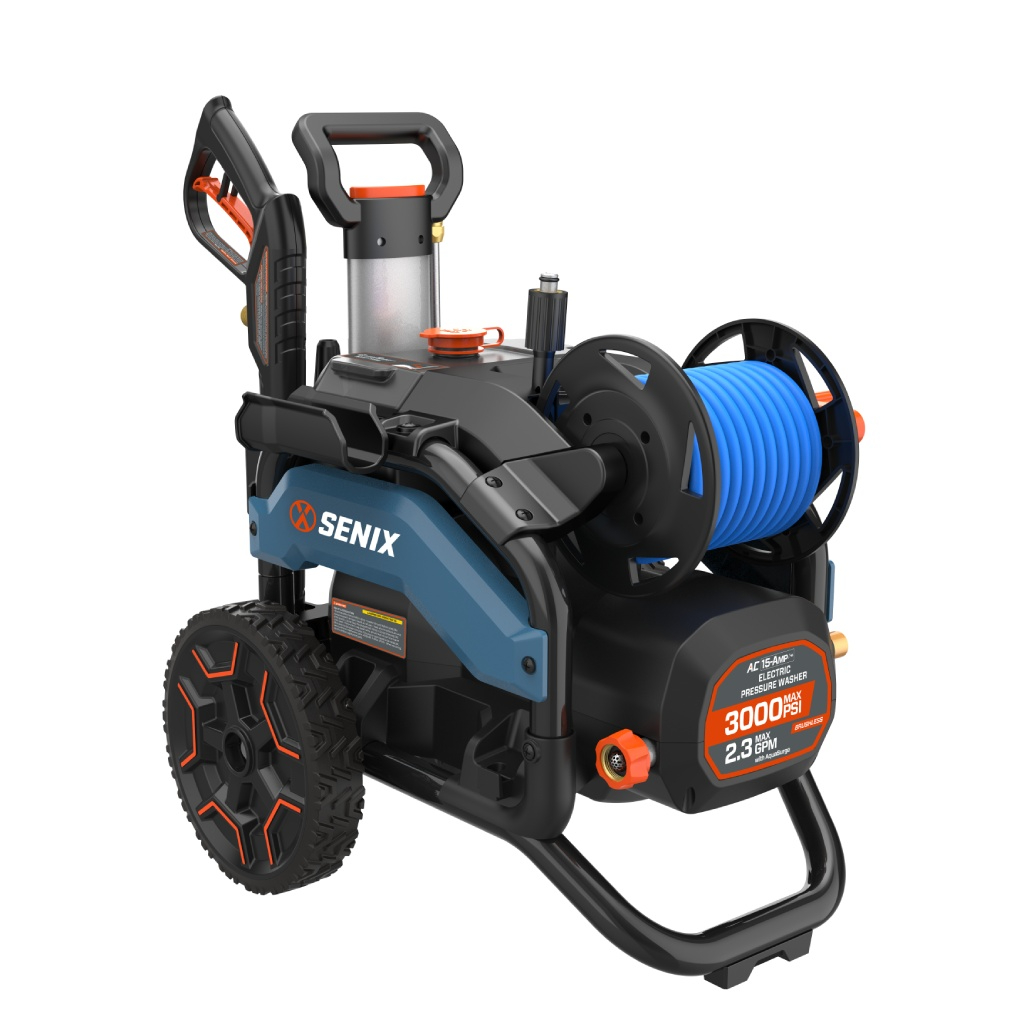
Senix 3000-PSI 2.3-GPM Electric Pressure Washer
Which Removes Dirt Faster: Pressure or Flow?
In most cleaning tasks, GPM plays a greater role in cleaning speed, while PSI determines whether the dirt can be removed at all. Pressure breaks the initial bond, but water volume carries contaminants away from the surface.
High PSI alone may leave dirt redepositing on the surface, requiring repeated passes. Higher GPM shortens cleaning time by:
1. Increasing surface coverage
2. Improving rinsing efficiency
3. Reducing the number of passes needed
For professional pressure washing, contractors often prioritize higher GPM machines because time efficiency directly impacts labor costs. This is why many commercial pressure washers feature moderate PSI paired with significantly higher flow rates.
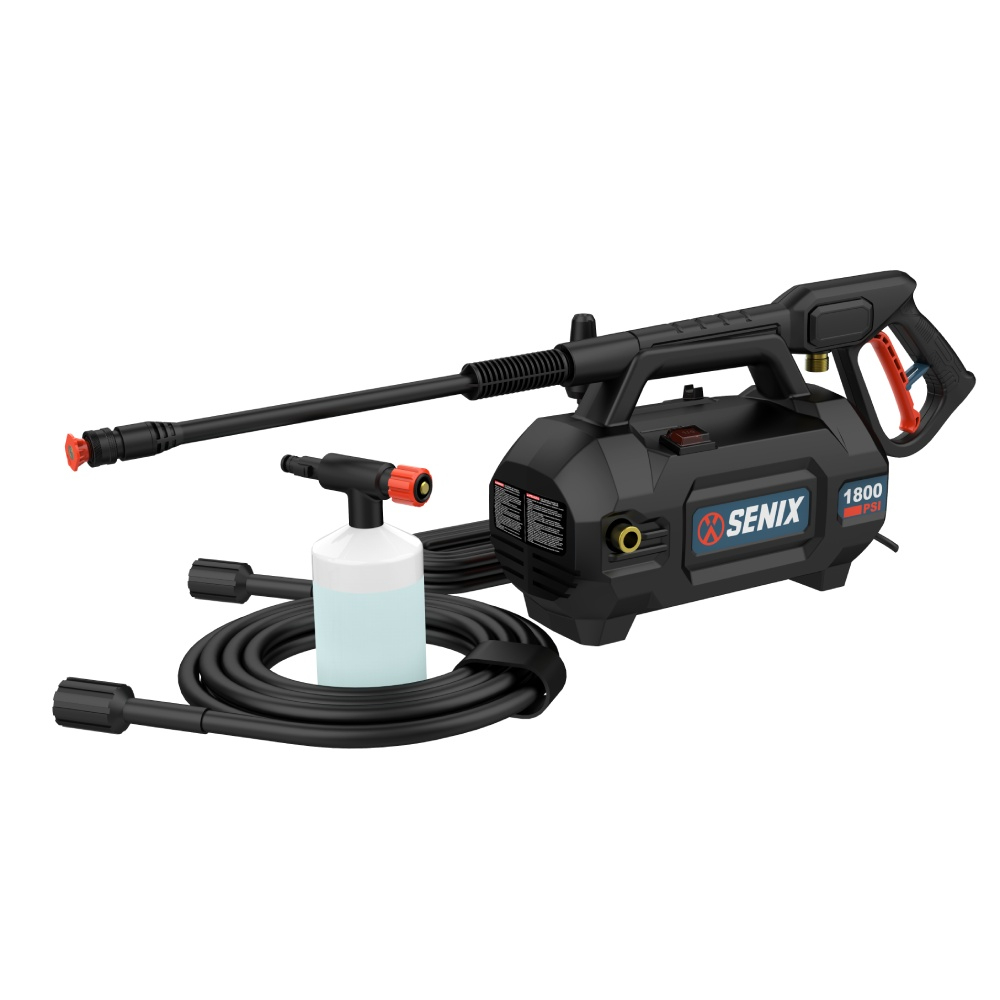
Senix 1800-PSI 1.1-GPM Electric Pressure Washer
What Matters More for Driveways and Concrete?
For driveways, sidewalks, and concrete surfaces, both PSI and GPM are important, but PSI must reach a minimum threshold to be effective. Concrete typically requires at least 2,500–3,000 PSI to break up embedded dirt, algae, and tire marks.
Once that pressure requirement is met, GPM becomes the deciding factor in how fast and evenly the area can be cleaned. A pressure washer with higher GPM will:
1. Rinse loosened debris more effectively
2. Reduce striping and uneven cleaning
3. Work better with surface cleaners, which rely heavily on flow rate
For homeowners, a pressure washer around 3,000 PSI and 2.5–3.0 GPM is a practical balance for driveway cleaning. For commercial or large-area concrete cleaning, higher GPM machines are often preferred, even if PSI remains similar.
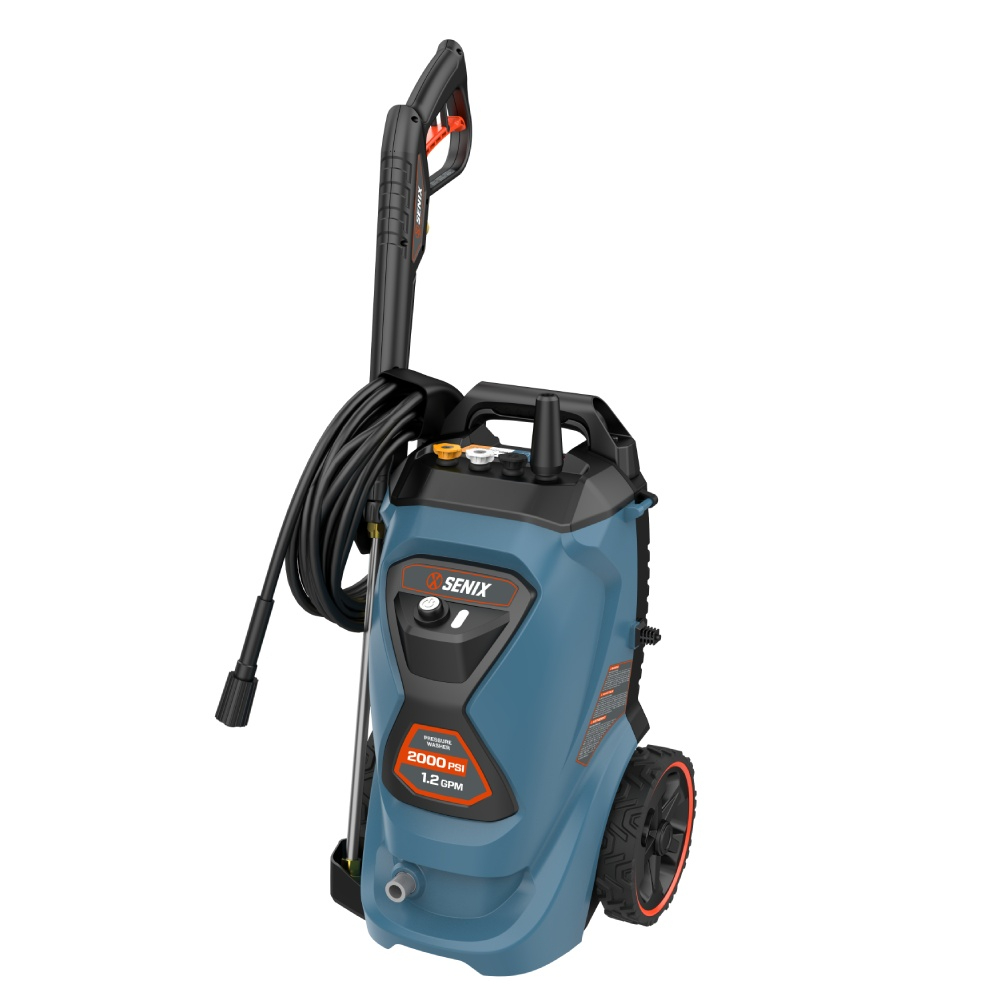
Senix 2000-PSI 1.2-GPM Electric Pressure Washer
Final Verdict: PSI, GPM, or Both?
The debate between PSI vs. GPM misses the point that both are essential, and neither should be evaluated in isolation. PSI determines whether a pressure washer can tackle tough grime, while GPM determines how efficiently and quickly the cleaning job is completed.
In general:
Choose sufficient PSI to match the surface and soil type.
Prioritize higher GPM once minimum pressure needs are met.
Look for balanced specifications rather than extreme numbers.
For most users, the best pressure washer is not the one with the highest PSI, but the one with the right combination of pressure and water flow for the intended application. Understanding this balance leads to better cleaning results, reduced surface damage, and a more efficient pressure washing experience overall.