

News
 (5.0)
(5.0)
What is a Miter Saw Used For?
What a Miter Saw is Mainly Used for?
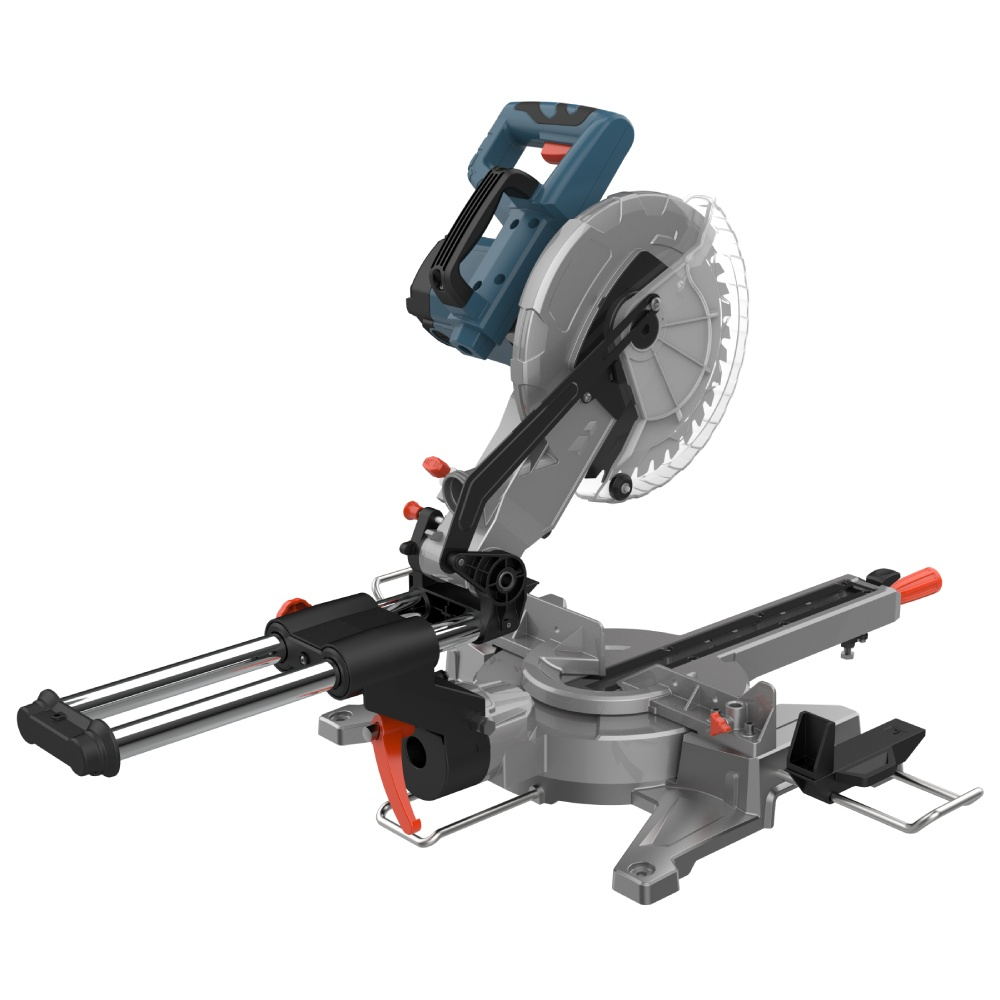
1800W 255mm(10'') Miter Saw
Miter saws are primarily designed to cut wood at accurate angles. They excel at crosscuts, which are cuts made perpendicular to the length of a board. The saw's pivoting blade allows for miter cuts at various angles, making it ideal for projects that require precision, such as picture frames, crown molding, and door casings.
In addition to straight cuts, compound miter saws can tilt in one or both directions, enabling bevel cuts. This flexibility allows you to handle complex joints with confidence. Whether building furniture or crafting decorative trim, the miter saw ensures every cut is accurate and repeatable, reducing waste and saving time.
Common Jobs You Can Do with a Miter Saw
A miter saw is a go-to tool for a wide range of woodworking and construction tasks:
Framing and Carpentry: Cut studs, beams, and boards precisely for building frames or furniture.
Flooring Installation: Achieve clean cuts for laminate or hardwood flooring around corners and edges.
Deck Building: Ensure accurate cuts for deck planks and railings to maintain structural integrity.
DIY Projects: Perfect for custom shelves, picture frames, or cabinetry where precise angles are critical.
Its ability to perform quick, repeatable cuts makes it indispensable for both large construction projects and small home improvements.
Why a Miter Saw is Great for Trim and Molding
Trim and molding work demands precision because even slight errors are noticeable along walls, doors, and ceilings. A miter saw allows you to make exact angle cuts for corner joints, such as those required for crown molding or baseboards.
The repeatable accuracy of a miter saw ensures that multiple pieces of trim align perfectly, eliminating gaps or uneven edges. This level of precision is difficult to achieve with hand tools or even circular saws. For finish carpentry, the miter saw is often considered an essential investment.
Materials You Can Cut with a Miter Saw
While wood is the most common material, a miter saw can handle a variety of substances with the correct blade:
Softwoods and Hardwoods: Ideal for most framing and finish carpentry.
Engineered Wood: Plywood, MDF, and particleboard can be cut cleanly when using a sharp, fine-toothed blade.
Non-Ferrous Metals: Aluminum and other soft metals can be cut safely using a specialized metal-cutting blade.
Plastic and PVC: Perfect for DIY trim, pipes, or decorative panels.
Selecting the right blade for the material is crucial for maintaining safety, precision, and blade longevity.
When to Choose a Miter Saw instead of Other Saws
Not every cutting task requires a miter saw, but it outperforms other saws in specific situations:
Circular Saw vs Miter Saw: Circular saws are portable and versatile but lack the precision needed for consistent angle cuts.
Table Saw vs Miter Saw: Table saws handle rip cuts (cutting along the grain) better, while miter saws excel at crosscuts and angled cuts.
Chop Saw vs Miter Saw: Chop saws can cut metal effectively but usually cannot tilt for bevel or compound cuts like a miter saw.
-
senix@senix.co